The Drill Press
“Shop Safety Series”

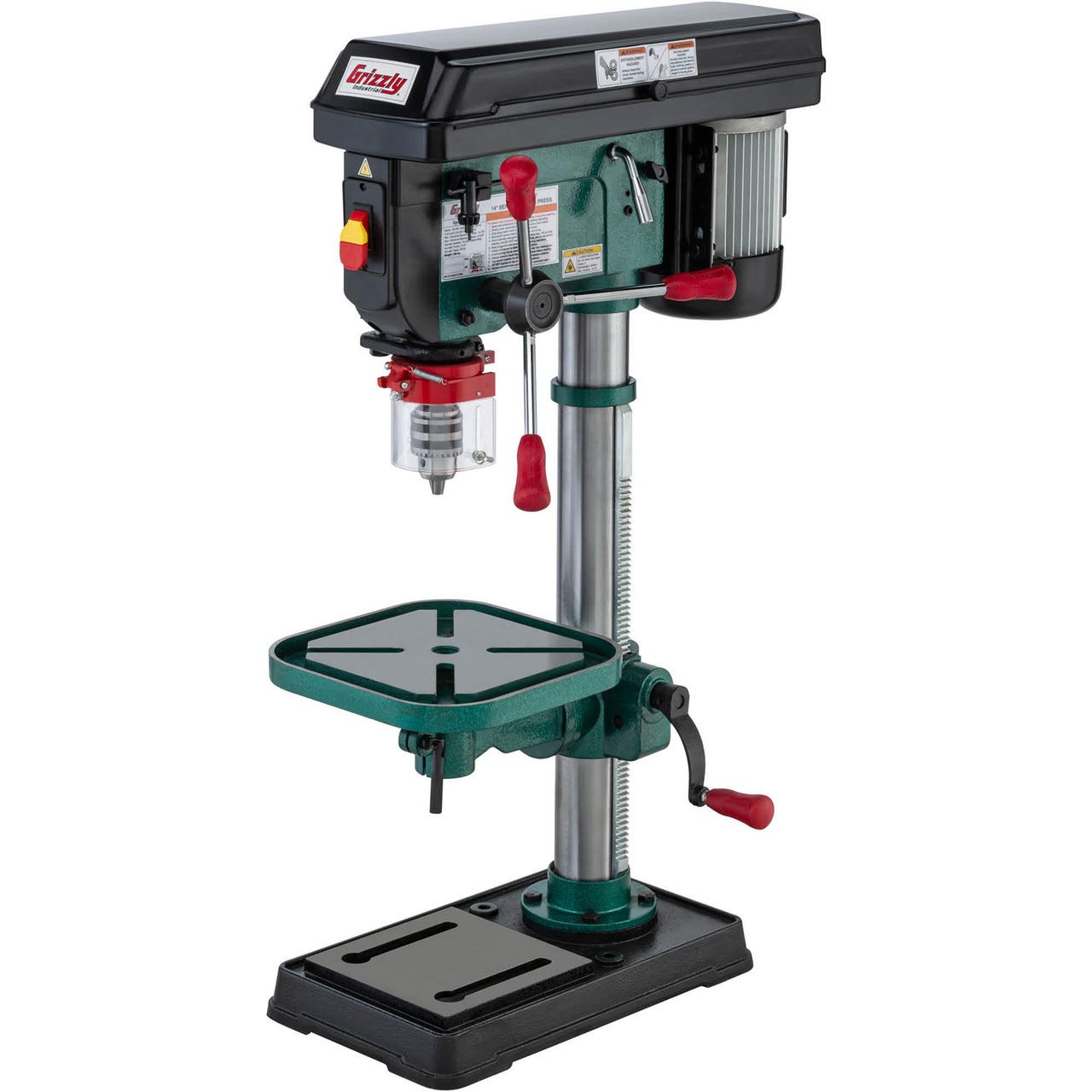
We don’t use the drill press often but it’s a great tool to have when needed. The alternative is to use a drill but students aren’t great about keeping the drill plumb while drilling larger holes. The drill press helps to keep the holes straight and isn’t difficult to learn how to use and many bench tops models are quite affordable.
The Operation
Operating the feed lever can be a challenge for smaller students but I instruct them to try it before actually drilling. Even with starting the piece of wood fairly close to the bit, it can be tricky to know which handle to grab to have a smooth operation.
With my experience, once students become familiar with the drill press, I have to caution them to keep them from rushing. They want to use it quickly, which can lead to carelessness and inaccuracy.
Using a sacrificial backing board will prevent tear out. We always have scraps of plywood around and we’ll cut them down to size to fit the drill press table. Instruct students to move the backing board to a clean spot and not drill over an existing hole.
To help make clean cuts, I teach students to drill a little, pick the bit back up to clear it, and then drill some more.
The Injuries
When we talk about shop safety, rule #2 is to keep our fingers away from the tool’s blade.
“But Mr. Stinson, the drill press doesn’t have a blade.”
“Correct. So let’s discuss how people typically injure themselves.”
I have students take their right hand and pinch the webbing of skin on their left that is between the thumb and pointer finger.
“Squeeze it hard! This is where most people injure themselves. And it doesn’t heal quickly either.”
Most injuries I’ve seen have been from failure to secure the material properly. The operator tries to physically hold the material they’re drilling into and lose the battle. The drill press then transfers the rotary motion to the material which then begins to spin at a high rate, injuring the operator, which is usually the webbing of that left hand.
The correct answer is for the operator to secure the material down (especially small pieces) to the drill press table or fence with clamps or other means.
The Next Level
For repeated drilling at a certain measurement, create a jig/stop that aligns the piece with the bit for increased productivity.
Create an adjustable tilting table for angle drilling. (I start here with staked stools for ease and then transition to hand drilling with the staked chairs to demonstrate how they can do it at home without a drill press.) There are a lot of simple plans and examples out there.
Holding for small pieces. I really like to use the wooden clamps for holding small pieces. Don’t be afraid to make a ‘V’ cut for holding round pieces.
The Alternatives
Like I shared, a drill press isn’t mandatory and a lot of woodworking and furniture making happens without it. I find it useful for drilling bigger holes or in precision moments. For small holes, I either use an eggbeater style for my younger students or an electric drill for my high school students.
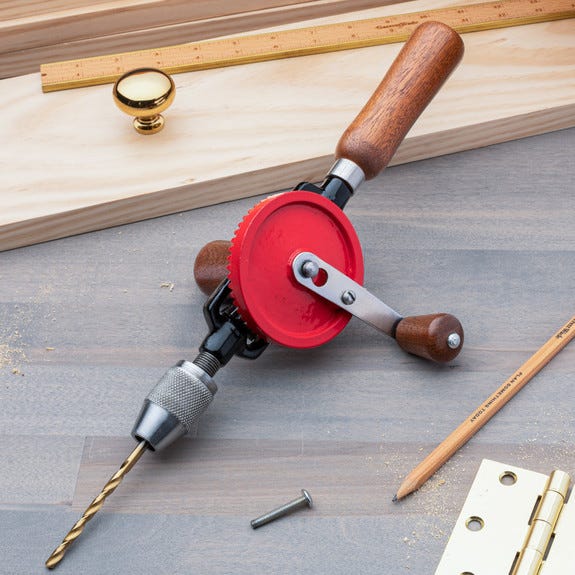
Use what you feel is within your budget and/or the capability of your students.
In closing, I didn’t talk about maintenance with the other tools but with the drill press, sharp bits are important. It’s easy to fall behind on keeping the bits sharp or it can be costly to replace them, especially the larger forstner bits but it’s part of the shop. Clean cuts. Smooth operation. Add it to the maintenance plan and/or shop budget.
Let me know if I forgot anything. And thanks to everyone who has been commenting on this series, it’s great to have other points of views and experiences.
The webbing injury point is such practical wisdom, way more memorable than generic 'be careful' warnings. Teaching students to squeeze theirown hand first creates a physical anchor for the safety lesson that'll stick when they're actually at the machine. I remeber learning to use a drill press and nobody mentioned material securing, just vaguely gesturing at clamps. The progression from teaching slow operation to preventing rushing once familiar is spot-on.
Another caution would be the great potential danger for things such as long hair, hoodie ties, etc to get caught and pulled into the spinning chuck.