Starting/Continuing a Shop Class
“Instruction - Safety - Projects - Funding”

I had a soon-to-be shop teacher reach out for some assistance so I decided to share it here for everyone else to see.
The first and foremost thought is to never allow yourself to be pressured into something that you’re not comfortable doing. Whether it’s the size of the class, a tool, a project,... you’re the one responsible for the safety of the students and yourself. If something were to happen, you’re the first one that’s going to be questioned.
We’ve talked about a few of these ideas before but they’re a bit buried in my Substack so I’ll give a synopsis (look at this shop teacher using fancy words) and link the different posts.
Instruction.
As much as your students, other teachers, the administration,... think that shop class is 100% making sawdust, this is not true. Even with a tiny, informal class out of your garage, there’s some “book” learning that goes on, or should go on. It could be something simple such as learning about trees and being good stewards of the earth to learning about manufacturing systems and how a wood product is mass produced from raw material.
Each state’s department of education should have CTE (Career and Technical Education) courses and the curriculum (standards) posted on their websites. Some are harder to navigate than others. Here’s Virginia’s CTE Resource page.
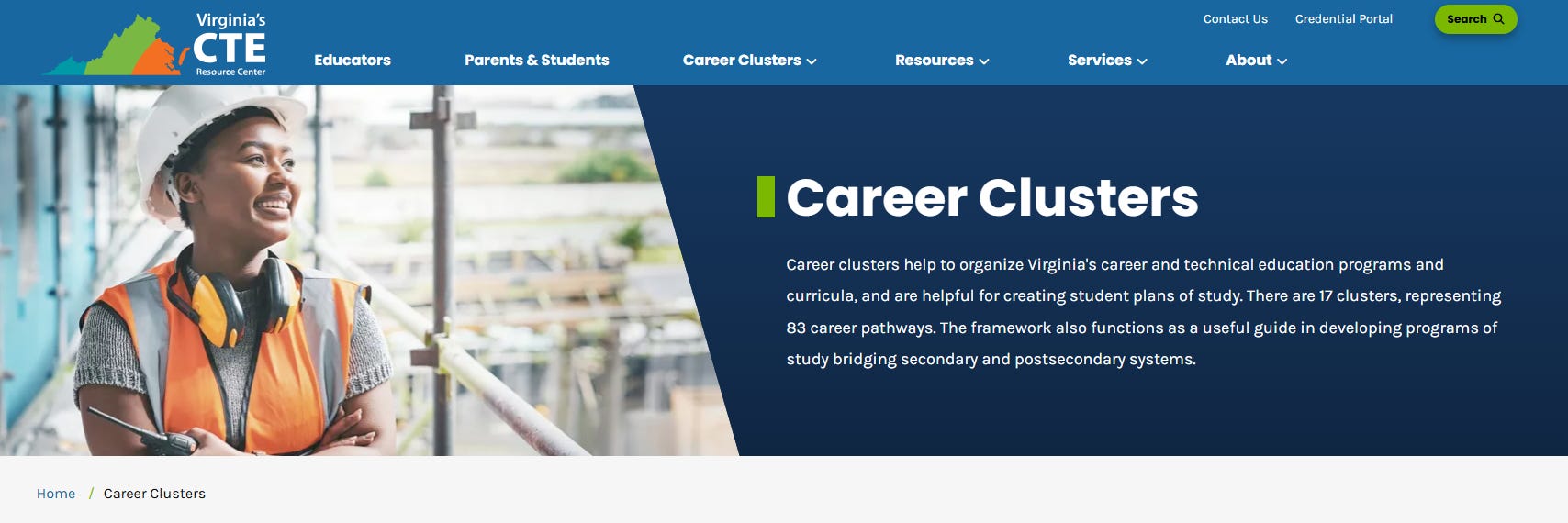
The common curriculum in our schools:
And other categories:
Carpentry
Manufacturing
Product Innovation and Design
Materials and Processes
Engineering and Innovations
For those of you in a public/private school, get with your CTE person and figure out which course(s) are available for you to teach.
For those of you in a private/homeschool setting, choose one or mix a few together depending on your audience.
Regardless, there’s a lot of fun stuff to do out there.
Safety.
It’s too easy for someone to buy a tool at a big box store, take it home, set it up, and cut their fingers off all in the same day. It’s gruesome and morbid to think about but it’s the reality.
We don’t have a ton of community resources for tool safety but they’re out there. If there’s any hesitation about your tool knowledge, take a class.
There’s some online (YT) resources out there but it’s hard to tell sometimes. My colleague, Tim Eggers has some great videos going through many power tools and showcasing how to use them safely. Teaching woodworking classes forced us to analyze and look hard at our techniques to make sure that we were setting our students up for success, every single time.
We talk a lot about our body energy as we use the tool. Pushing the wood by the blade in various tools and the force behind the chisel, planes, and other tools. If we or the tool were to slip, where would it go?
And we have to make sure we include using push pads when necessary as part of our safety program. (In my opinion, I’ve seen some instructors use them unnecessarily, but it’s their program and I would never deliberately step on their toes.)
I’m looking at doing a series of tool safety during winter break.
Projects.
It can be difficult to find projects that are within the level of the students, the shop tools, and help to reinforce the curriculum.
I’ve been collecting plans for quite a while and created a Google Drive folder with them. They range from simple to complex and I’ve been fortunate enough to have a decent amount to choose from for my students. And I still collect.1
Minwax is a great place to look for plans and I like their collectible shelf.
Funding.
The typical school budget might not be enough. Hit up the local builders association, woodworkers guilds, and anyone else you might think would help you out. Even $50 is something.
Talking about what I do to anyone who asks what I do for a career has been very beneficial. People have stepped up and shown their support through financial means, helping me to connect with others, or with other resources. It’s great to feel the support for our younger generation.
As always, let me know here or privately if I need to expound on anything I’ve shared with you or anything else that comes up. We want you to be successful.
1 I don’t mind sharing my collection. Message me your email address and I can add you to the list. These plans are for educational purposes only and aren’t to be sold.