Communication
“Yes, That’s What Teaching is About”

Sometimes, it’s sitting through bad classes to get you to think about the topic and how you would teach it.
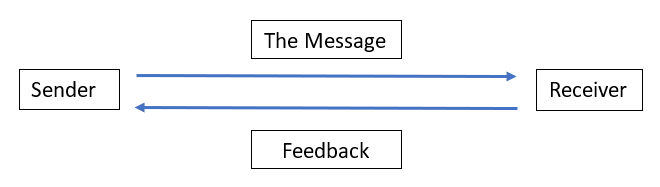
I feel really strongly about communication because that’s essentially what teaching is all about; transferring knowledge and skills from one person to the other. Does it mean that the student (receiver) will be able to build and create at the same level as the teacher (sender) once receiving said knowledge? No. There’s also time and skill development that will happen but the student will have sufficient information to be able to develop those skills.
Let’s look at the different parts and responsibilities of communication.
- The Sender. This is fluid and will change as communication happens. The sender is anyone trying to send a message. The instructor is identified as being the main sender in this environment, but they must understand and empower the student to also be a sender when appropriate to make sure that communication is effectively happening.
- The Message. As clear and concise as possible and in a language that the Receiver can understand. Too many times we use acronyms, phrases, or words that are specific to what we teach and unfamiliar to the Receiver. The Message could contain verbal and nonverbal cues to include tone, body language, and hand gestures.
- The Receiver. Like the role of the Sender, it’s fluid. Know and understand when you’re the Sender and when you’re the Receiver. Understand that you can’t control the Receiver, but you can control the Message. More to follow below.
- The Feedback. This is where our social awkwardness, inexperience, or lack of attention can prevent us from recognizing one of the greatest teaching tools that the Receiver can give us. The Feedback lets us know how we’re doing and if the message is being received as we intended it to be.
The Feedback can be delivered to us either verbally or nonverbally. Verbal feedback could be statements of understanding, questions, or comments. Nonverbal feedback could be facial expressions, body movements, glazed over eyes, sleep,… or other signs of disinterest, confusion, or even agreement and understanding. Don’t take the negative feedback personally, turn it into becoming a better instructor.
What are the common causes for miscommunication within teaching?
- Noise. Noise is described as anything that gets in the way of communication. This could be a language barrier, actual noise, lack of experience, or the fact that we’re trying to put physical actions into words. The list is long and would take pages to describe every hinderance out there.
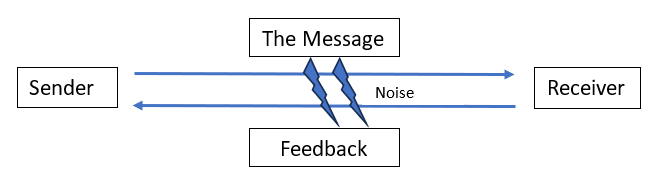
- Inexperience. Both by the student and the teacher. I’ve had incredibly successful craft professionals that had a difficult time teaching people. They didn’t know how to describe their actions and processes. The instructor that I witnessed this week tried so hard to utilize an object as a metaphor for communication, but it just fell apart.
The inexperience of the student can make it a challenge to communicate efficiently. I’ve had to pause instruction and teach other basic skills or principles before I could move forward again.
What are common ways to improve communication?
- Positive Learning Environments. People need to be comfortable with asking questions, especially if there’s any hint that they’re wrong. One of the phrases that I’ve learned to use is, “Thank you for being brave.” I’ll use it in conjunction with, “But there’s a better answer.”, when they don’t answer correctly. Or I’ll give them partial credit and ask someone to give elaborate or finish answering.
- Rephrasing. It’s almost comical how many times I’ve seen people simply raise their voices when dealing with language barriers. Do they really think that simply speaking louder will help? Why not choose different terms or words? You wouldn’t use the same words for an elementary school child and a high school student, so be prepared to teach to different levels, adapting your communication/instructing as necessary.
- Scaffolding in the education world is a way to break down instructions into more manageable chunks, ideas, or principles. Just like you might while communicating with a younger child, instead of giving a large block of instruction, you might break it down into several smaller pieces. You also might pose a series of questions that help to lead the student in the direction that you want them to think instead of asking them a broader question.
Here’s a practical exercise when talking about communication. Have two people sit back-to-back, one with a shape (or series of shapes), and the other with paper and a pencil. Have the person with the shape(s) describe it to the other person who has to draw it. Feel free to laugh and have fun.
I want to share that it took me a few lessons to realize that teaching was another skill set that I needed to practice, study, and keep looking for ways to improve. I’m constantly trying to improve communication in the classroom and just when I think I’ve figured it out, another challenge appears.
What other things about communication have you learned while teaching? Please, feel free to share.
Your framework captures the sender's side clearly — rephrasing, scaffolding, creating a safe environment. But I've noticed there's a dimension on the receiver's side that determines whether communication actually lands, no matter how well the sender performs.
From working in the service industry, I've seen people read a sign that says "First 3 customers only — no reservations" and still call to make a reservation. Or bring a "first 3 customers" coupon at 8 PM and not understand why it's expired. Or completely miss the point of an analogy and wonder why you changed the subject. These aren't rare cases — they show up constantly, and each one breaks down for a different reason.
This connects directly to your point about the instructor whose metaphor fell apart. Sometimes the issue isn't the metaphor itself — it's that the receiver doesn't process analogies as a format. The sender can craft the perfect analogy and it still won't land, because the gap is in how the receiver takes in information, not how the sender delivers it.
Your "Feedback" element is crucial, but here's what I've found: some receivers genuinely don't know they don't understand. They nod, they say "got it" — and they mean it. They're not pretending. So the challenge isn't just reading feedback accurately; it's recognizing when feedback itself isn't a reliable signal.
There's also a stage issue with encouragement. "Thank you for being brave" is perfect for someone who's genuinely hesitant. But for someone who wants to grow but isn’t moving yet, that same warmth can accidentally reward standing still. The same words become medicine or inertia depending on where the receiver is.
None of this reduces the sender's effort — your practical suggestions are solid. I just think the receiver's processing stage is often the missing piece that determines whether good teaching actually turns into understanding.